Sunday, December 29, 2013

2014: Another bright sandy beach stretches before us

A new year is about to begin for those of us following the Gregorian calendar. 2014 rolls off the mouth smoothly, unlike 2013, which required effort for some of us. Most of us appreciate the potential changes and transitions that might come in with the new year's tides. (I'm writing this as I listen to the sound of gentle waves greeting white sandy shores in tropical surroundings on YouTube.)

We sigh at the relief of being blessed with the opportunity to say goodbye to the past year and welcome the forward-moving motion of the coming year. Our sighs echo those gentle waves as they renew hope in our dreams. And our dreams are plenty if we can imagine each dream representing a tiny grain of sand. When we put all those dreams together, it's quite a beautiful landscape to behold - the watery blue sighs uniting with the bright sparkles of hope. No wonder we like to walk barefoot on sand or get buried in it.

The end of the year is always a time for reflection, a way of appreciating how we were able to fit the grandiosity of our resolutions within the realities of our everyday lives. Compromise and flexibility are required to meet the challenges posed by circumstances beyond our control. And this past year, if you read the news like I did, you'd know just how much hardship some people faced around the world, and in our own backyards. Sometimes shrugging our shoulders and accepting defeat is the best way forward. It doesn't mean we give up on our goals; instead, we can use the lessons to re-fashion these goals so we're running (or walking) at roughly the same pace as our daily agendas.

Part of keeping with our resolutions is to know how fast or how slow to work on our goals. Half the battle is in knowing how much we can handle, but also how much we're willing to adjust to make room for the unexpected. That might take a lifetime to figure out as we learn to nurture an appreciation for and understanding of our bodies and our capabilities, the unpredictability and moodiness of nature, and also for the people whose lives constantly affect our own.

Life doesn't have to be a competition. We can locate our own Start and Finish Lines, and not worry so much about the "win". Every self-help guru I know keeps saying it's what's in between those two poles that count. I agree. People who come to that knowing and are patient with the ebb and flow, in my mind, are the ones who can go on to accomplish great things in their lives, never losing hope for what they believe to be their intrinsic purpose.

Happy New Year to my family, friends, colleagues, and the few stray readers of this blog. Thank you for giving me a wonderful 2013. No new dreams for me in 2014, only a renewed commitment to the ones I already have, the ones I will re-explore like a bright-eyed child grasping the sparkly sand as it cascades through her fingers.


Tuesday, October 29, 2013

Happy Hearty and Safe Halloween

I found a lovely stock photo that encapsulated some of the magical qualities of Halloween for me.  It's not a scary illustration, but one that shows the warmth, radiance, and mystery of this time of year.  Who lives in that lonely house on the hill?  Will kids be able to go there for trick-or-treating?  Are those fairies flying off into the night sky to shine a bright path that will lead Halloween night owls to the house's door?  
One more day before my favourite day of the year!  It's Halloween everybody and instead of feeling frightened, my feet are restless in anticipation of a walk through my neighbourhood to see all the kiddies dressed up as miniature ghouls and storybook characters.  It's always lovely to watch the little tykes dragging their already full pillow cases of candy up the stairs of homes with gleaming jack-o-lanterns and dollar-store decor!  Even better when the doors open and I can take a peek into the warm light of a family home that's alive with laughter, music, and colourful bowls filled with the Mars bar series, and other assorted goodies.

I remember having had only ONE opportunity to go trick-or-treating.  I was in the 8th grade, and my best friend and I decided to dress up in Elizabethan dress for men.  We wore tights underneath these heavy, but very fancy, velvet with gold trimming tunics.  All we needed was the Henry VIII facial hair - well I already had some of that being a brown girl and all!  It was a cold night, as to be expected, but we were warm underneath our royal refinery.  We had pillow cases, too.  It was like a dream come true for me!  I remember years before when my sister and I used to pray that we'd be allowed to go trick-or-treating someday!  When our mom overheard us, she was dismayed by our desire to participate in such a superstitious Western custom, and told us it was rather sinful of us as Muslims to pay homage to ghosts and witches.  We weren't thinking of that, of course, we just wanted candy!  So, finally, I got my chance.  My mom had eased up a bit on her puritanism, and my dad wasn't around to keep me tethered on a leash.  I was actually FREE for the night and ready to roam!

When Jenn - my best gal friend at the time (she was awesome! and still is!) - met up, we went all around the Cole Harbour and Eastern Passage area of Dartmouth, Nova Scotia.  I got a chance to see the long-haired red-head dude I was so obsessed with.  He even recognized me in my get-up but yawned when he saw me and then got into his gray camaro.  My eyes sprang out of their sockets when I saw him, and if it weren't for Jenn to pull me back to the mission at hand, namely to score as much kiddie sugar as possible, I would have spent the entire night chasing after my luscious-locks Romeo as he drove that 80s motor machine at his usual slow n' steady speed so he could check out all the "action" on his block.

Well, back to the present...

Since I live in an apartment, I can't really welcome any kids and give them treats, but I think this year, I'm going to step out for a moment to take in all the excitement, listen to the laughter all across the streets, and the screams too when scarecrows on porches suddenly become alive!  I'm going to walk through the smaller, cozy streets, see the candle flames dancing in the frame of small stained-glass windows, hear the creaks of heavy doors opening, and smell the sweet, beckoning fragrance of freshly-baked apple pie.  Maybe some folks might be enjoying a glass of wine as they sit on their porches, wrapped in woolen shawls, waiting for their neighbours' kids to come by, or maybe waiting for their own kids to come back!

I guess the best part is when the kids do come back and nearly rip those pillow cases to shreds as they pick through the loot to select those one or two delectable pieces that would be permitted as a snack before it's time to vigorously brush those candy-crusted teeth and get to bed.  School the next day would bring even more excitement as the kiddies think about what treats they could exchange, share with, or even just give as gifties to their classmates.  There needs to be more giving and sharing, I think :)

Halloween always rounds up so nicely, every year, and maybe one year, I'll spend it with my niece back in Vancouver as we explore her neighbourhood, collect some good treats and some not-so-good-seriously-unhealthy treats, and maybe create some sparkling, fairy-dust adventures along the way.  Here's wishing all of you, your families, and the kiddies in your lives a Happy Hearty and Safe Halloween!


Saturday, October 5, 2013

The Note That Was Left Behind


PHOTO BY SI

Suicide notes.  They give loved ones an idea of what might have gone through the suicide victims' minds in their final hours.  Some of them are filled with sad goodbyes to all the people who brought them variations of joy and pleasure or recollections of happier times from a dream-like distant past.  But others are written with a heavy angry heart pointing fingers at all the individuals who made their lives miserable: the bullies who sought their demise, and succeeded.  Then there are the ones that are filled with regret over what could have been.  These notes are portals, a way inside the soul's distress, a way to understand the profound isolation a person living with severe mental health challenges, such as depressive mood disorder, is forced to suffer through, or someone who has experienced insurmountable bullying and alienation from their peers.  In their reality, there is no longer any trust in their thoughts, as their thoughts keep pushing them towards self-destruction.

The overall societal reaction to people who take their own lives is often revulsion, without any understanding of the mental, physical and emotional distress of the victims, because well-adjusted folks who neatly fit and succumb to the systematized matrix of modern society are supposed to be the norm. Do we even have a 'norm'?

People who commit suicide are called cowards, self-obsessed or narcissistic because they were selfish and did not consider the effects of their decision on their loved ones.  Another criticism is that the victims' suffering was not as bad as they thought because there are so many people out there who have gone through "far worse".  Therefore, these victims should have appreciated what they had in their lives instead of complaining about and focusing on what was not working.  Well, it's never as simplistic as that.  One person's response to their life circumstances is always different from another's.  The constant comparison of our lives makes an assumption that somehow we're all the same, similar temperaments and brain development, similar childhood histories and environments, and so, we should all be able to keep our chins up, march forward with hope and confidence. Yeah, right. 

The uniqueness of human suffering is exposed in all the different ways our spirits react to tragic life events.  It is no fault of someone who reacts in ways that bring her greater vulnerability and harm.  It is the body's chemistry, its millions of interactions among cells, and the external forces that complicate its nature that contribute to the soul's demise.  Even current scientific research can not completely explain the phenomenon of suicide and what goes on in the brain that might initiate self-destruction.  And certainly, my blog post here does not have all the answers as well.

In the book Night Falls Fast: Understanding Suicide, Kay Redfield Jamison shares many case histories of clients whose mental health challenges became too unbearable that not even the treatment concoctions that Big Pharma mixed in its laboratories could prevent these people from taking their lives.  Redfield espouses a more compassionate approach to understanding suicide, and has struggled with suicidal tendencies throughout her professional life as a professor of psychiatry.  Staying alive is an everyday struggle for people who are "living with suicide", and normality is when the mind is only filled with thoughts of just self-harm like cutting or mixing booze and drugs rather than planning and visualizing their death with their own hands.

Of course, so many people who have gone through similar struggles do survive, but our biological affinities can not protect us from the sui generis of human behaviour and intellect.  Precisely why we need to nurture compassion for the ones we've lost and the ones we might lose.

Mental illness can comprise a broad spectrum of disorders with some of us possibly being at the cusp of a potential mental health issue, while others are already enmeshed in some of the more serious conditions that can precipitate self-harming behaviour.  Dealing with people who manifest some of their challenges in public spaces or at social gatherings can engender a confused range of emotions among family, friends, and colleagues.  Many of us do not have the patience to support someone who is experiencing a breakdown.  Instead, the tendency is to stand back, watch, and judge due to our ignorance of the person's issues.  Then some of us might explode ourselves at the person, which will aggravate the situation and add fuel to the rapidly spreading flames.  Without understanding the complexity of the human mind and its vulnerabilities, we question why this person is being so "problematic" and why they can't seem to just "suck it up" like the rest of us.  It is that very attitude that creates so much of the stigma around mental illness, and prevents people from seeking help. Alas! we are back full circle.

So next time we hear of someone who took their life - whether it be a celebrity or your neighbour or the community activist you rubbed shoulders with at a recent demonstration - let's show them compassion instead of berating them for making such a painful departure.  If we knew the impact of psychosis, we would be aware that it was not really a choice, but an act of compulsion and desperation to escape the ongoing thought cycles in their heads or the threats and oppression they faced from our societies that are bent on upholding restrictive and exclusionary norms and standards.  Please, let's honour their struggles, celebrate their achievements, value their goals and talents, and finally listen to their voices and the things they've been saying all along, things no one really paid much attention to while they were alive.

I dedicate this blog to a friend who lost his life to suicide.  May he rest in peace, and may the memory of his compassion, commitment, and care to the people who loved him serve as an example of leadership and resilience to all of us, and may his spirit live forever in the work we each do to lift others.

May we all develop the knowledge, insight, and compassion needed to help save lives from suicide. For more information on suicide prevention training and workshops, please contact the Canadian Mental Health Association at 416-789-9079 or visit their website

Sunday, May 5, 2013

Sorrow for Bangladesh, immigrant guilt

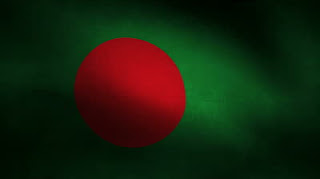
The Bangladeshi flag - the red spot symbolizing the blood of the millions who died during the war of independence against Pakistan in 1971, the green background representing the richness of the country's natural landscape.

The bodies covered in dust with limbs crushed under a corporation's concrete are arresting images to shock the world into silence, into confusion, into indignation.  But they provoke a more profound kind of sadness in me, a Bangladeshi who fled her country of birth at the age of two with her family. The country was in tatters, just emerging from the bloodbath that ensued when the country had ripped itself from the choke hold of Pakistani governance and Urdu-speaking elitism.

These images are not from the murder and mayhem of the independence struggle, but from the modern-day exploitation of Bangladeshi garment workers, who are forced out of economic necessity to work in unsafe conditions underneath faulty roofs, and under the glare of supervisors cracking their verbal whips snapping with threats of firings if quotas are not being reached.

I look at the Joe Fresh t-shirts hanging in my closet, and I'm reminded of how far I've strayed from that "old" identity of mine that I had long forgotten in the rush to be raised "Canadian".  Guilt overcomes me as I think about how much I have here, what I spend my money on, and how little I know of the culture and customs of my native land.

I would often turn a blind eye to the chaos happening in Bangladesh to avoid asking myself why I'm not there, in the thick of things, to assist, to support, to help my comrades make change happen in the country.  I certainly assist, support, and perhaps, make some change happen here in the work I do with the Alliance for South Asian AIDS Prevention.  But my conscience prevails, exposing the (ill)logic I live by.

I've never experienced living in Bangladesh and don't remember my early toddler-hood there, but visiting the country (Dhaka) for two weeks as an adult was enough for me to be thankful that my parents left when they did.  I wasn't permitted to walk the streets to explore the neighbourhood around me due to the possibility of being harassed.  The beautiful dwellings I stayed at overlooked the shantytowns, and though the walls around me were sound, they could not prevent the aura of longing "down there" from permeating these privileged sanctuaries.

My parents opened up countless opportunities and privileges to me and my siblings by making the move to Canada: the free healthcare, the relatively stable political climate (though not without its Canadian brand of corruption), the education system (minus the ever-increasing tuition fees with loan re-payments that seem to stretch over a lifetime), the perceived freedom to be as we were without having guns pointed at us, the materialism that was accessible, albeit by credit, and the general sense of comfort and ease of movement within a vast landscape with so much to discover.

Growing up in Goosebay, Labrador and then Halifax/Dartmouth, Nova Scotia drew me further away from the language and customs of what now seemed a foreign country since all brown folks in Canada were seen as a homogeneous whole.  I learned to see us that way, too.  I listened to my mom and dad speak in Bangla, but I always talked back in English.  Soon, I just tucked away my humble beginnings altogether.

My race and ethnicity created a lot of confusion in school when I started making friends with black kids living in Cole Harbour. There weren't many brown kids here either, and my friends were curious to know exactly what race I belonged to since I didn't seem neither black nor white. I told them that I wasn't sure myself and that I'd be happy to be part of their community if they accepted me.

By this time, with the exception of my parents knowing some Bangladeshi couples in the South Asian community, I really didn't identify as Bangladeshi.  I was just a chubby brown kid into white pop culture.  I didn't want to be the "other".  I wanted to identify and connect with everyone, especially with white people. In so doing, I forgot my cultural heritage, my people's history, their art, their struggles, and their suffering.

But in the early 90s, I met a group of strong, socially-conscious brown Muslim women when my family and I moved for the third time to Vancouver. I became a part of this circle of friends, and was inspired to embrace Muslim feminist interpretations of Islamic practice and Quranic verse. But being Bangladeshi never entered the realm of identities I took on as I grew into adulthood.

My loyalty was to Islam and the Arabic language at the time.  I prayed the obligatory prayers five times a day, sometimes spending longer than usual on my prayer mat listing off all the people I wanted God to send blessings to. My friends and I staged "occupy the men's section" protests by disrupting EID prayers in mosques or by entering through the front door of the mosque instead of the back where women were supposed to come in through, or by taking part in board meetings to demand inclusion of women in governance and decision-making in the mosques.  We also challenged Western media for its constant racist constructions of Muslim women as passive, oppressed victims of Islam's brand of patriarchy and misogyny.

But where was the Bangladeshi in me?  It reared its sometimes when my parents took us to potlucks and parties hosted by Bangladeshi folks. During these warm, high-spirited gatherings, we could hear the language being spoken and taste food prepared the Bangladeshi way. And yes, there were always lots of fish dishes! That feeling of being Bangladeshi surfaced again when I left Canada for Japan to teach English.  There, I met some wonderful people from Bangladesh who encouraged me to reconnect with my language and culture. I felt in that particular ex-pat community the strongest sense that I was not being loyal to my "true" identity.

Merely speaking the language, eating the specialty dishes, or socializing with other Bangladeshis did not make me feel any closer to my country of birth.  In the wake of tragedies in Bangladesh, from massive floods to building cave-ins to political demonstrations and unjust detentions where hundreds, thousands perish, I am once again reminded of those long-forgotten roots as I feel the crushing weight of my own indifference/disconnection.

I often wonder how all my aunts, uncles, cousins, nephews and nieces who continue to live there do it.  Where do they find the courage to live in a country that is constantly on the brink of political and economic turmoil, uncertainty, upheaval, and natural disasters?

In the journalism program at Humber College, I've been fortunate enough to have met two young women who identified as Bangladeshi.  One went on to pursue her love of writing fiction.  And the other wrote about the politics and devastation happening in Bangladesh with fervour, passion, and despair.  I envied her commitment to her people, and wished I could feel as she did.  But I had moved too far away from it, in heart, in mind. And in memory.

I believe though my reasons for choosing a profession in the service of marginalized populations was an attempt to remind myself to never take life for granted. I wasn't looking for happily ever after. I wanted to continue working in solidarity with people all over the world who were deprived of a living wage, a safe and secure home, the freedom to express themselves, the freedom to move where they wished to or had to in order to escape persecution and violence and to voice their political views without fear of detention and/or torture, the right to organize and attend public protests and demonstrations, and the right to be who they intrinsically were without harassment.

I could take stock of my lifestyle in order to play some small role in changing things for the good.  I question how I spend my money.  I question the way I live - do I really need so many material comforts?  Can I survive on a minimalist lifestyle that doesn't demand so much from the earth, the factories, the animals, and the people?  Can I continue living in this small space, and never ask for the hedonistic "more"? Can I re-learn what it means to identify as Bangladeshi?  Can I reconnect with my his/herstory and the artistic temperaments and talents, the linguistic humility and cadences, the food, the mannerisms and customs, the traditions, the green hills of Chittagong (my birth home), and most importantly, the blood, sweat, and abject deprivation of the more than 30% of the population living under the poverty line?

"My brother has died.  My sister has died. Their blood will not be valueless," said one protester during the May Day demonstrations in Bangladesh.

Blood runs thicker than bottled water and the $15 shirts we "Canadians" can buy at Joe Fresh in the Loblaws conveniently located near my workplace. All readily and colourfully consumed in Canada. But painstakingly made in Bangladesh.
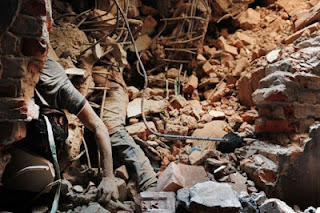
Hundreds of Bangladeshi garment workers lost their lives after the collapse of  a factory in Savar on April 30, 2013. COURTESY FRANCE 24


Sunday, February 17, 2013

Winter Wonderland by the Eurythmics

I remember when I sang this song at a kindergarten to a backing track that me and my good friend T.Y. put together in his home studio in Tokyo.  I was dressed in a Santa Claus suit, and was singing with a chorus of Japanese children with about over 100 parents and their babies looking on at one of my favourite kindergartens.  I taught there for about a year or so.  I worked for a company called E.S. Consulting that connected EFL teachers to an organization that had English-language programs at kindergartens.  The organization was called J.A.C.P.A.  Don't ask me what the abbreviation means.  It's the experience I can talk hours and days about.

I worked for this one kindergarten (among several others) and they took really good care of me.  The headmaster, his wife, and their gorgeous son were really supportive and encouraged the kids to practice their English with me.  They would bring me a cup of green tea every morning before my lessons started.  All the teachers would participate in my lessons with their kids and they'd help me get the kids into all the English-learning activities and songs.  There was one student who didn't speak a word when I was there...but she participated and received love, care, and support from the staff, and the other kids. She responded diligently to all my prompts, pointing at that picture or the other, and taking part in the movement exercises.

For Xmas, the kindie kids held a concert for all their parents.  One after the other, each class took its position on stage and sang some lovely Japanese songs.  Then it was my turn!  They gave me the mic, and I stepped out in my Santa dress, black fishnet tights, and high heels, long curly hair streaming out from underneath the Santa cap.  The backing track began and I started singing!  I was actually in tune this time because my friend T.Y. made sure that we recorded the instrumental in my key!!  And the kids on the stage chimed in.  It was a lovely moment!

I have to thank T.Y. for taking the time to help me put the backing track together.  I did the keys, and his brilliant musicianship took care of the rest.  As a matter of fact, T.Y. helped me find my voice at that time.  I wasn't much of a singer then though, but he had faith in my potential.  And that was enough.

I miss those days in Japan.  There were so many wonderful moments like the one above.  I met new people almost everyday.  I loved the warmth and friendliness of the communities I interacted with, not just Japanese!  I met my own country people there - Bangladeshis, Canadians, and then Scottish, Brazilian, English, Australian, African, North African, Indian....so many amazing people!!

Thank you Japan.  The city, the country, and its people sure gave me a lot to be thankful for, including the opportunity to find my musical voice, even though it wasn't quite polished!  Thank you for your warmth, hospitality, friendship, and love.  It was a most beautiful of Winter Wonderlands to walk through.